
Collect Customer Feedback on Social Media | 8 Proven Tactics
Marketing & Growth Associate
On this page▾
Not every customer who recommends your business leaves a Google review. Some share their experiences through Instagram Stories, others create TikTok videos, and many express their opinions directly through comments and messages.
These everyday interactions provide valuable insights into how customers perceive your business. However, unlike traditional online reviews, social media feedback is often scattered across posts, conversations, and different platforms, making it difficult to capture and reuse.
Having a dedicated system for collecting customer feedback makes these interactions considerably more valuable.
In this guide, we'll explore eight practical ways to collect customer feedback on social media and how businesses can turn those experiences into social proof using ReviewShare.
Why You Should Collect Customer Feedback on Social Media
Social media gives businesses access to customer experiences that traditional review platforms don't always capture.
A customer might post an Instagram Story about their favorite restaurant, recommend a cleaning company in a Facebook community, or upload a video documenting their experience with a local fitness studio.
These interactions are valuable because they happen naturally within the customer's everyday environment.
Collecting feedback through social media helps businesses:
- Understand customer expectations and preferences.
- Discover customer experiences beyond traditional review websites.
- Identify recurring concerns and opportunities for improvement.
- Build stronger relationships through direct communication.
- Gather authentic content for future marketing campaigns.
- Develop social proof that reflects different customer experiences.
The opportunity extends beyond understanding customer satisfaction. With the right approach, social media feedback becomes a reusable marketing resource.
8 Proven Tactics to Collect Customer Feedback on Social Media
1. Create and Share a Customer Feedback Form
Asking customers to leave feedback through social media is straightforward. Getting them to complete the process is often more challenging.
Customers are less likely to participate when they need to search for your business, navigate multiple pages, or complete a lengthy form.
A dedicated feedback collection link removes unnecessary steps.

With ReviewShare, businesses can create a dedicated review collection form and distribute its link across their social media channels.
Instead of directing customers to different review platforms, businesses can provide a clear destination where customers share their experiences.
Your collection link can be shared through:
- Instagram bio and Stories.
- Facebook posts and business pages.
- Social media direct messages.
- LinkedIn posts and conversations.
- Customer follow-up messages.
For example, a beauty salon could publish an Instagram Story after a busy weekend with the following message:
Visited us recently? We'd love to hear about your experience. Share your feedback using the link below.
Keep your message focused on the customer experience. A clear invitation with one action is more effective than a lengthy explanation about why your business needs reviews.
Pro tip: Ask customers specific questions when requesting feedback, such as what they enjoyed most about their visit or whether there is anything you could improve. These prompts encourage more meaningful responses.
2. Start Conversations Through Comments and Direct Messages
Some of the most useful customer feedback is hidden in everyday social media conversations.
Customers frequently leave recommendations, questions, complaints, and expressions of appreciation underneath business posts. These interactions offer opportunities to understand their experiences in greater detail.
For example, imagine a customer leaves the following comment on a cleaning company's Instagram post:
“You guys did an amazing job on our apartment last week!”
Instead of simply liking the comment, the business could respond:
“Thank you! We're so glad you loved the results. Was there anything about the service that particularly stood out to you?”
A simple follow-up question encourages customers to provide more detailed feedback.
Businesses can then continue the conversation through a direct message and invite the customer to submit a review using their ReviewShare collection link.
This approach is particularly useful because it builds on an existing customer interaction rather than introducing an unexpected request.
When collecting feedback through conversations:
- Respond personally rather than relying entirely on generic replies.
- Ask follow-up questions where appropriate.
- Acknowledge both positive and constructive feedback.
- Obtain permission before republishing private messages or customer comments.
The aim is to encourage genuine conversations that produce meaningful customer insights.
3. Make Feedback Collection Part of Your Social Media Content
Businesses often create social media content to promote services, announce offers, and attract new customers. However, social media content also provides opportunities to learn from existing customers.
Instead of waiting for customers to initiate feedback, create posts that encourage them to share their experiences.
Some effective content ideas include:
- Instagram Stories with question stickers.
- Polls asking customers about their favorite services.
- Facebook posts requesting customer suggestions.
- Behind-the-scenes videos followed by open-ended questions.
- Customer appreciation posts inviting people to share their experiences.
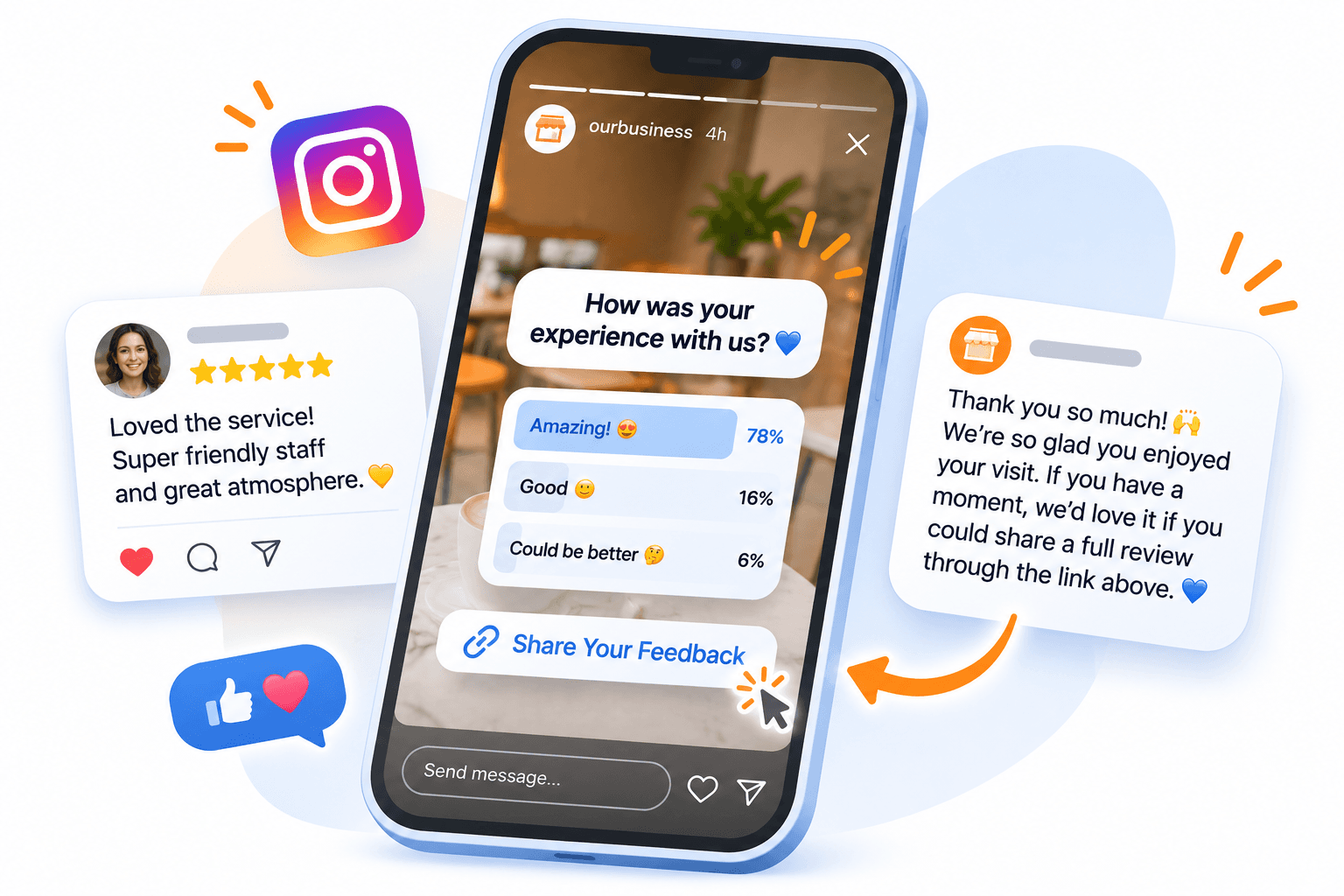
A restaurant, for example, could publish a Story asking customers which seasonal menu item they would like to see return.
A fitness studio could ask members which classes they enjoy most and invite them to explain their choices through a dedicated feedback link.
Social media polls are useful for quick responses, while a ReviewShare collection form provides an opportunity for customers to submit more detailed experiences.
Combining both approaches allows businesses to gather immediate opinions and longer-form testimonials.
4. Collect Customer Reviews From Multiple Platforms
Social media is only one part of your online reputation.
Customers may discover your business through Instagram but leave their actual reviews on Google, Yelp, or another platform.
A restaurant could have years of Google and TripAdvisor reviews alongside customer recommendations on Facebook. A real estate agent might receive detailed client experiences through Zillow and Google while actively building a presence on Instagram.
Managing these experiences separately makes it difficult to present a complete picture of the business.
This is where ReviewShare's review import functionality becomes particularly useful.
ReviewShare allows businesses to bring reviews together from supported platforms, including:
- Google Reviews
- Yelp
- Zillow
- TripAdvisor
Businesses can also incorporate supported social media content alongside their written reviews.
This creates a broader collection of customer experiences without requiring customers to submit the same review again.
For example, a restaurant could combine its Google reviews, TripAdvisor recommendations, and relevant Instagram content into one branded ReviewShare page.
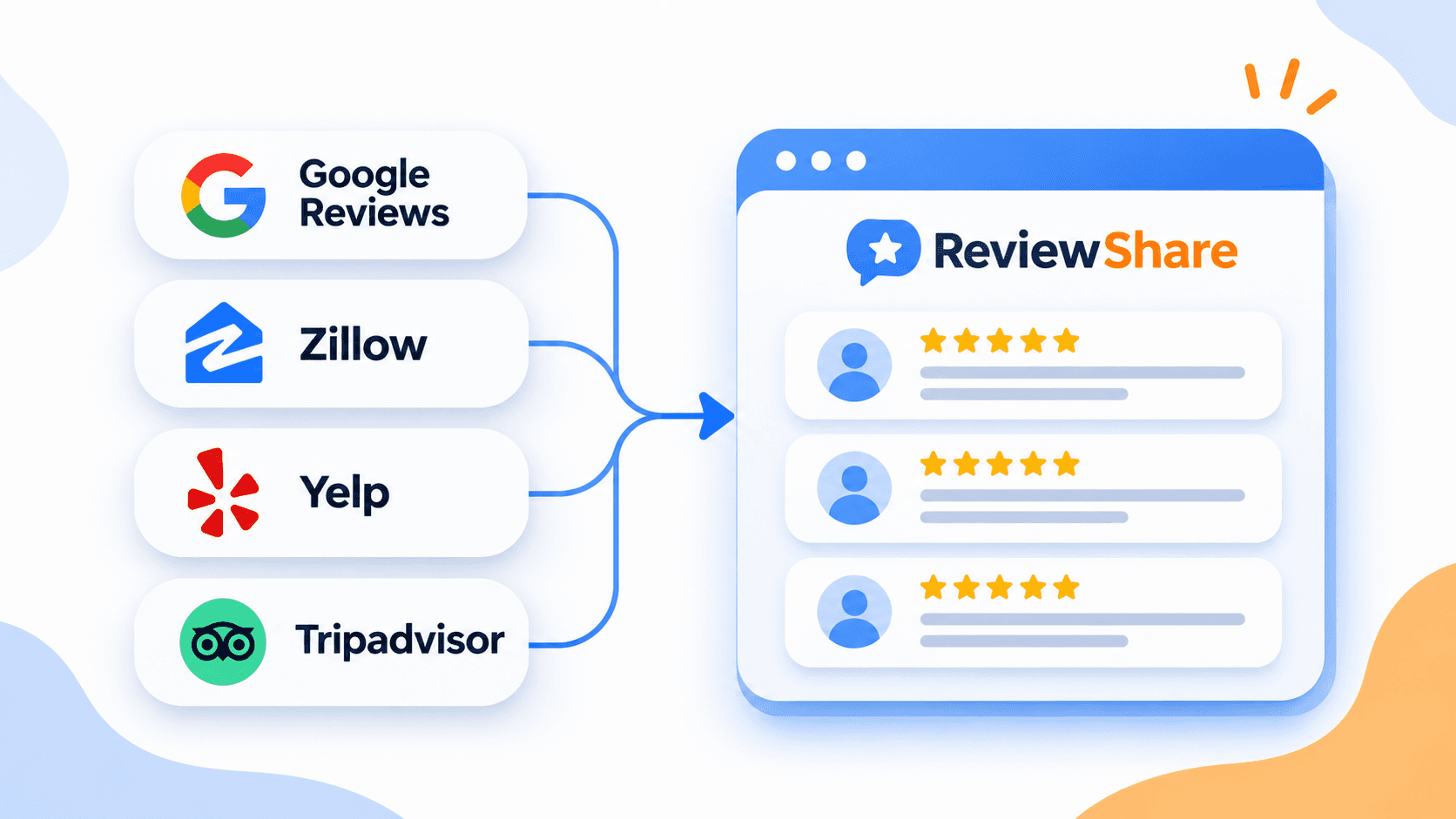
Businesses can then share that page through social media, allowing potential customers to explore experiences from different sources through a single link.
Pro tip: Use Review Groups to organize reviews according to particular services, locations, or customer experiences. This makes your existing customer feedback more relevant to different audiences.
5. Capture Video Testimonials and Customer-Generated Content
Written reviews explain customer experiences. Video testimonials introduce an additional element of authenticity by allowing potential customers to see and hear those experiences directly.
Customer-generated content can take several forms:
- A TikTok video showing a customer's experience.
- An Instagram Reel recommending a local business.
- A customer demonstrating the results of a service.
- A recorded testimonial describing a personal experience.
These formats are particularly useful for businesses where visual results and personal experiences influence purchasing decisions.
A hair salon could showcase customers explaining their transformation. A fitness studio could feature members discussing their progress. A real estate agent could share a client's experience of purchasing their first home.
With ReviewShare, businesses can incorporate video testimonials and supported social media content into their review pages alongside traditional platform reviews.
Rather than allowing valuable videos to disappear within an increasingly crowded social media feed, businesses can give them a dedicated place within their broader collection of social proof.
Customers who prefer speaking about their experiences rather than writing lengthy reviews also benefit from having a video testimonial option.
Always obtain appropriate permission before using customer-generated content in promotional materials.
6. Collaborate With Creators and Brand Advocates
Customer feedback does not always come from traditional review requests.
Local creators, returning customers, and brand advocates frequently share experiences with audiences that already trust their recommendations.
For local businesses, these experiences can be especially valuable because creators often communicate in a relatable way and demonstrate how a service fits into everyday life.
A restaurant could collaborate with a local food creator who documents a dining experience. A beauty business could work with a creator to demonstrate a particular treatment or service.
Encourage collaborators to describe their genuine experiences rather than providing scripted praise.
Useful questions include:
- What was your first impression?
- Which part of the experience stood out?
- How did the service compare with your expectations?
- Who would you recommend this business to?
With appropriate permission, businesses can incorporate relevant creator content and customer recommendations into their ReviewShare pages.
This allows the content to remain accessible beyond its original social media campaign.
Sponsored collaborations should be clearly disclosed, and paid endorsements should not be presented as independent customer reviews.
7. Follow Up With Customers Through Personalized Invitations
Many customers intend to leave reviews but forget once their interaction with a business is complete.
A well-timed follow-up gives them another opportunity to share their experiences.
Businesses that receive inquiries and bookings through social media can make feedback collection part of their existing customer communication process.
Consider these situations:
- A salon completes an appointment booked through Instagram.
- A cleaning company finishes a service arranged through Facebook.
- A restaurant hosts an event promoted through social media.
- A real estate agent completes a transaction with a client acquired through LinkedIn.
Each completed interaction creates an opportunity to request feedback.
ReviewShare provides multiple ways to distribute review invitations, including shareable collection links, email, SMS, and QR codes.
Here is an example of a personalized follow-up message:
Hi Sarah, thank you for visiting us yesterday! We'd love to hear what you thought of your experience. If you have a moment, you can share your feedback here: [Review Link]. We really appreciate your time.
Businesses can send a similar message through social media direct messages or their preferred communication channel.
Keep the request short, personalized, and easy to complete. Invite honest feedback from customers regardless of whether their experience was positive or negative.
8. Repurpose Customer Feedback to Encourage More Reviews
Customers are more likely to understand what kind of feedback a business values when they see experiences shared by other customers.
Publishing customer testimonials on social media demonstrates that customer opinions are acknowledged and appreciated.
A business could share:
- A customer testimonial as an Instagram post.
- A video review as a Reel or TikTok video.
- A collection of customer experiences in a Facebook post.
- A service-specific review as part of a LinkedIn case study.
Include a collection link where appropriate so other customers have an opportunity to contribute their own experiences.
However, individual social media posts have a limited lifespan. As new content is published, older testimonials become less visible.
ReviewShare's Wall of Love provides businesses with a dedicated way to showcase a broader collection of customer experiences.

Businesses can direct their social media audiences to a branded review page where written reviews, testimonials, and relevant social content remain accessible.
This creates an ongoing feedback cycle: customers share their experiences, businesses acknowledge and showcase those experiences with permission, and other customers are encouraged to contribute their feedback.
Best Tool for Collecting Customer Feedback: ReviewShare
Social media offers several ways to gather customer feedback, but collecting it is only the beginning.
A recommendation shared on Instagram, a five-star Google review, and a recorded customer testimonial all contribute to your business reputation. Their value increases when they become accessible beyond the platforms where they originally appeared.
ReviewShare is a review and social proof platform that helps businesses collect, organize, display, and share customer experiences through one branded, shareable page.
Unlike tools focused exclusively on feedback collection, ReviewShare also gives businesses multiple ways to use the experiences they collect.
Collect New Reviews and Testimonials
Request customer feedback through dedicated collection forms, shareable links, email invitations, SMS invitations, and QR codes.
These collection methods allow businesses to request feedback across digital and physical customer touchpoints.
Import Existing Platform Reviews
Bring existing customer reviews from supported platforms such as Google, Yelp, Zillow, TripAdvisor, and Facebook into a centralized collection.
Businesses can make use of the reputation they have already established rather than starting their testimonial collection from scratch.
Showcase Social Media Content
Incorporate supported social media content from channels such as Instagram and TikTok alongside traditional customer reviews.
This allows businesses to present different forms of customer recommendations, from written experiences to visual content.
Create a Branded Review Page
Build a customizable page that reflects your business identity, featuring customer reviews, testimonials, social content, branding, and relevant business links.
Share the page through your Instagram bio, email signature, marketing campaigns, or direct customer conversations.
Display Customer Reviews on Your Website
ReviewShare offers customizable review widgets, including carousel, bento, and marquee layouts.
Businesses can place these widgets on service pages, homepages, and other relevant website sections to introduce customer experiences during purchasing decisions.
Organize Reviews With Review Groups
Group customer reviews around specific services, customer needs, or experience types.
For example, a real estate agent can showcase separate customer experiences for buyers, sellers, and relocation clients, making their social proof more relevant to each audience.
Build a Wall of Love
Bring together customer appreciation, testimonials, platform reviews, and video content in a dedicated showcase that highlights the experiences behind your business.
Understand Social Proof Engagement
Use ReviewShare's analytics to understand how audiences engage with your published social proof and make more informed decisions about how you present customer experiences.
Together, these features make ReviewShare more than a feedback collection tool. It provides businesses with a way to extend the value of their customer experiences across social media, websites, and everyday customer interactions.
Trial ReviewShare for free and give your customer feedback a place beyond the social media feed.
FAQs
What is the best way to collect customer feedback on social media?
Use a combination of interactive social media posts, direct conversations, and dedicated review collection links. Review forms make it easier for customers to submit detailed experiences without navigating multiple platforms.
How can I collect customer reviews from Instagram?
Ask customers to share their experiences through Instagram Stories, direct messages, or a dedicated review collection link placed in your bio. With permission, you can also reuse relevant customer-generated content and testimonials.
Is there a tool that combines social media testimonials and Google reviews?
Yes. ReviewShare allows businesses to bring supported platform reviews, video testimonials, and social media content together into a branded, shareable review page.
How can I display feedback collected through social media on my website?
You can use ReviewShare's customizable website widgets to display relevant customer reviews. Supported social content and video testimonials can also be showcased through a branded review page or Wall of Love.
Can I collect customer feedback without having a business website?
Yes. ReviewShare provides shareable review collection links and branded review pages that businesses can distribute through social media, email, SMS, and QR codes without needing a dedicated business website.